- Jan 10 Tue 2017 23:24
-
英文兒童文學 week18
- Jan 10 Tue 2017 22:44
-
英文兒童文學 week17
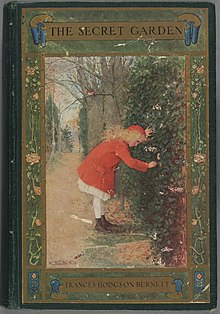
The Secret Garden
Plot summary
At the turn of the 20th century, Mary Lennox is a sickly and unloved 10-year-old girl, born in India to wealthy British parents who never wanted her. She is cared for by servants, who allow her to become a spoiled, aggressive and selfish child.
After a cholera epidemic kills her parents and the servants, Mary is discovered alive but alone in the empty house. She briefly lives with an English clergyman and his family before she is sent to Yorkshire, England to live with Archibald Craven, an uncle whom she has never met, at his isolated house, Misselthwaite Manor.
At first, Mary is as rude and sour as ever. She dislikes her new home, the people living in it, and most of all, the bleak moor on which it sits. However, a good-natured maid named Martha Sowerby tells Mary about the late Mrs Craven, who would spend hours in a private walled garden growing roses. Mrs Craven died after an accident in the garden, and the devastated Mr Craven locked the garden and buried the key. Mary becomes interested in finding the secret garden herself, and her ill manners begin to soften as a result. Soon she comes to enjoy the company of Martha, the gardener Ben Weatherstaff, and a friendly robin redbreast. Her health and attitude improve, and she grows stronger as she explores the moor and plays with a skipping rope that Mrs Sowerby buys for her. Mary wonders about both the secret garden and the mysterious cries that echo through the house at night.
As Mary explores the gardens, her robin draws her attention to an area of disturbed soil. Here Mary finds the key to the locked garden and eventually the door to the garden itself. She asks Martha for garden tools, which Martha sends with Dickon, her 12-year-old brother. Mary and Dickon take a liking to each other, as Dickon has a kind way with animals and a good nature. Eager to absorb his gardening knowledge, Mary tells him about the secret garden.
One night, Mary hears the cries again and decides to follow them through the house. She finds a boy named Colin living in a hidden bedroom. She soon discovers that they are cousins, Colin being the son of Mr and Mrs Craven, and that he suffers from an unspecified spinal problem. Mary visits him every day that week, distracting him from his troubles with stories of the moor, Dickon and his animals, and the secret garden. Mary finally confides that she has access to the secret garden, and Colin asks to see it. Colin is put into his wheelchair and brought outside into the secret garden. It is the first time he has been outdoors for years.
While in the garden, the children are surprised to see Ben Weatherstaff looking over the wall on a ladder. Startled and angry to find the children in the secret garden, he admits that he believed Colin to be a cripple. Colin stands up from his chair and finds that his legs are fine, though weak from long disuse. Colin soon spends every day in the garden, sometimes with Dickon as company. The children conspire to keep Colin's recovering health a secret, so as to surprise his father, who is travelling abroad. As Colin's health improves, his father sees a coinciding increase in spirits, culminating in a dream where his late wife calls to him from inside the garden. When he receives a letter from Mrs Sowerby, he takes the opportunity finally to return home. He walks the outer garden wall in his wife's memory, but hears voices inside, finds the door unlocked, and is shocked to see the garden in full bloom, and his son healthy. The servants watch, stunned, as Mr Craven and Colin walk back to the manor together.
Rejuvenation
Magical realism
Overcoming trauma
- Jan 10 Tue 2017 22:44
-
英文兒童文學 week17
The Secret Garden
Plot summary
At the turn of the 20th century, Mary Lennox is a sickly and unloved 10-year-old girl, born in India to wealthy British parents who never wanted her. She is cared for by servants, who allow her to become a spoiled, aggressive and selfish child.
After a cholera epidemic kills her parents and the servants, Mary is discovered alive but alone in the empty house. She briefly lives with an English clergyman and his family before she is sent to Yorkshire, England to live with Archibald Craven, an uncle whom she has never met, at his isolated house, Misselthwaite Manor.
At first, Mary is as rude and sour as ever. She dislikes her new home, the people living in it, and most of all, the bleak moor on which it sits. However, a good-natured maid named Martha Sowerby tells Mary about the late Mrs Craven, who would spend hours in a private walled garden growing roses. Mrs Craven died after an accident in the garden, and the devastated Mr Craven locked the garden and buried the key. Mary becomes interested in finding the secret garden herself, and her ill manners begin to soften as a result. Soon she comes to enjoy the company of Martha, the gardener Ben Weatherstaff, and a friendly robin redbreast. Her health and attitude improve, and she grows stronger as she explores the moor and plays with a skipping rope that Mrs Sowerby buys for her. Mary wonders about both the secret garden and the mysterious cries that echo through the house at night.
As Mary explores the gardens, her robin draws her attention to an area of disturbed soil. Here Mary finds the key to the locked garden and eventually the door to the garden itself. She asks Martha for garden tools, which Martha sends with Dickon, her 12-year-old brother. Mary and Dickon take a liking to each other, as Dickon has a kind way with animals and a good nature. Eager to absorb his gardening knowledge, Mary tells him about the secret garden.
One night, Mary hears the cries again and decides to follow them through the house. She finds a boy named Colin living in a hidden bedroom. She soon discovers that they are cousins, Colin being the son of Mr and Mrs Craven, and that he suffers from an unspecified spinal problem. Mary visits him every day that week, distracting him from his troubles with stories of the moor, Dickon and his animals, and the secret garden. Mary finally confides that she has access to the secret garden, and Colin asks to see it. Colin is put into his wheelchair and brought outside into the secret garden. It is the first time he has been outdoors for years.
While in the garden, the children are surprised to see Ben Weatherstaff looking over the wall on a ladder. Startled and angry to find the children in the secret garden, he admits that he believed Colin to be a cripple. Colin stands up from his chair and finds that his legs are fine, though weak from long disuse. Colin soon spends every day in the garden, sometimes with Dickon as company. The children conspire to keep Colin's recovering health a secret, so as to surprise his father, who is travelling abroad. As Colin's health improves, his father sees a coinciding increase in spirits, culminating in a dream where his late wife calls to him from inside the garden. When he receives a letter from Mrs Sowerby, he takes the opportunity finally to return home. He walks the outer garden wall in his wife's memory, but hears voices inside, finds the door unlocked, and is shocked to see the garden in full bloom, and his son healthy. The servants watch, stunned, as Mr Craven and Colin walk back to the manor together.
Rejuvenation
Magical realism
Overcoming trauma
- Jan 10 Tue 2017 22:32
-
英文兒童文學 week15
Literary realism
Background
Broadly defined as "the representation of reality",realism in the arts is the attempt to represent subject matter truthfully, without artificiality and avoiding artistic conventions, as well as implausible, exotic and supernatural elements.
Realism has been prevalent in the arts at many periods, and is in large part a matter of technique and training, and the avoidance of stylization. In the visual arts, illusionistic realism is the accurate depiction of lifeforms, perspective, and the details of light and colour. Realist works of art may emphasize the ugly or sordid, such as works of social realism, regionalism, or Kitchen sink realism.
There have been various realism movements in the arts, such as the opera style of verismo, literary realism, theatrical realism and Italian neorealist cinema. The realism art movement in painting began in France in the 1850s, after the 1848 Revolution. The realist painters rejected Romanticism, which had come to dominate French literature and art, with roots in the late 18th century.
Realism as a movement in literature was a post-1848 phenomenon, according to its first theorist Jules-Français Champfleury. It aims to reproduce "objective reality", and focused on showing everyday, quotidian activities and life, primarily among the middle or lower class society, without romantic idealization or dramatization.[5] It may be regarded as the general attempt to depict subjects as they are considered to exist in third person objective reality, without embellishment or interpretation and "in accordance with secular, empirical rules."As such, the approach inherently implies a belief that such reality is ontologically independent of man's conceptual schemes, linguistic practices and beliefs, and thus can be known (or knowable) to the artist, who can in turn represent this 'reality' faithfully. As literary critic Ian Watt states in The Rise of the Novel, modern realism "begins from the position that truth can be discovered by the individual through the senses" and as such "it has its origins in Descartes and Locke, and received its first full formulation by Thomas Reid in the middle of the eighteenth century."
In the late 18th-century Romanticism was a revolt against the aristocratic social and political norms of the previous Age of Reason and a reaction against the scientific rationalization of nature found in the dominant philosophy of the 18th century,as well as a reaction to the Industrial Revolution. It was embodied most strongly in the visual arts, music, and literature, but had a major impact on historiography, education and the natural sciences.[12]
19th-century realism was in its turn a reaction to Romanticism, and for this reason it is also commonly derogatorily referred as traditional or "bourgeois realism".However, not all writers of Victorian literature produced works of realism. The rigidities, conventions, and other limitations of Victorian realism, prompted in their turn the revolt of modernism. Starting around 1900, the driving motive of modernist literature was the criticism of the 19th-century bourgeois social order and world view, which was countered with an antirationalist, antirealist and antibourgeois program.
Initiation
Characteristics
Mircea Eliade discussed initiation as a principal religious act by classical or traditional societies. He defined initiation as "a basic change in existential condition," which liberates man from profane time and history. "Initiation recapitulates the sacred history of the world. And through this recapitulation, the whole world is sanctified anew... [the initiand] can perceive the world as a sacred work, a creation of the Gods."
Eliade differentiates between types of initiations in two ways: types and functions.
Psychological
Religious and spiritual
A spiritual initiation rite normally implies a shepherding process where those who are at a higher level guide the initiate through a process of greater exposure of knowledge. This may include the revelation of secrets, hence the term secret society for such organizations, usually reserved for those at the higher level of understanding. One famous historical example is the Eleusinian Mysteries of ancient Greece, thought to go back to at least the Mycenaean period or "bronze age".
In the context of ritual magic and esotericism, an initiation is considered to cause a fundamental process of change to begin within the person being initiated. The person conducting the initiation (the initiator), being in possession of a certain power or state of being, transfers this power or state to the person being initiated. Thus the concept of initiation is similar to that of apostolic succession. The initiation process is often likened to a simultaneous death and rebirth, because as well as being a beginning it also implies an ending as existence on one level drops away in an ascension to the next. Initiation is a key component of Judaism, Vaishnavism, Sant Mat, Surat Shabd Yoga, Wicca, and similar religious gnostic traditions. It denotes acceptance by the Guru and also implies that the Chela (student or disciple) agrees to the requirements (such as living an ethical lifestyle, meditating, etc.)
- Jan 10 Tue 2017 22:18
-
英文兒童文學 week16
The Wonderful Wizard of Oz
The Wonderful Wizard of Oz is an American children's novel written by author L. Frank Baum and illustrated by W. W. Denslow, originally published by the George M. Hill Company in Chicago on May 17, 1900. It has since been reprinted on numerous occasions, most often under the title The Wizard of Oz, which is the title of the popular 1902 Broadway musical as well as the iconic 1939 musical film adaptation.
The story chronicles the adventures of a young farm girl named Dorothy in the magical Land of Oz, after she and her pet dog Toto are swept away from their Kansas home by a cyclone. The novel is one of the best-known stories in American literature and has been widely translated. The Library of Congress has declared it "America's greatest and best-loved homegrown fairytale". Its groundbreaking success and the success of the Broadway musical adapted from the novel led Baum to write thirteen additional Oz books that serve as official sequels to the first story.
Baum dedicated the book "to my good friend & comrade, My Wife", Maud Gage Baum. In January 1901, George M. Hill Company completed printing the first edition, a total of 10,000 copies, which quickly sold out. The Wonderful Wizard of Oz sold three million copies by the time it entered the public domain in 1956.
Publication
The book was published by George M. Hill Company. Its first edition had a printing of 10,000 copies and was sold in advance of the publication date of September 1, 1900. On May 17, 1900, the first copy of the book came off the press; Baum assembled it by hand and presented it to his sister Mary Louise Baum Brewster. The public saw the book for the first time at a book fair at the Palmer House in Chicago, July 5–20. The book's copyright was registered on August 1; full distribution followed in September. By October 1900, the first edition had already sold out and the second edition of 15,000 copies was nearly depleted.
In a letter to his brother Harry, Baum wrote that the book's publisher George M. Hill predicted a sale of about 250,000 copies. In spite of this favorable conjecture, Hill did not initially predict that the book would be phenomenally successful. He agreed to publish the book only when the manager of the Chicago Grand Opera House Fred R. Hamlin committed to making The Wonderful Wizard of Oz into a musical stage play to publicize the novel. The play The Wizard of Oz debuted on June 16, 1902. It was revised to suit adult preferences and was crafted as a "musical extravaganza", with the costumes modeled after Denslow's drawings. Hill's publishing company became bankrupt in 1901, so Baum and Denslow agreed to have the Indianapolis-based Bobbs-Merrill Company resume publishing the novel.
Baum's son Harry Neal told the Chicago Tribune in 1944 that L. Frank told his children "whimsical stories before they became material for his books". Harry called his father the "swellest man I knew", a man who was able to give a decent reason as to why black birds cooked in a pie could afterwards get out and sing.
By 1938, more than one million copies of the book had been printed.Less than two decades later in 1956, the sales of his novel had grown to three million copies in print.
Plot summary
Dorothy is a young girl who lives with her Aunt Em and Uncle Henry and her little dog Toto on a Kansas farm. One day, Dorothy and Toto are caught up in a cyclone that deposits her farmhouse into Munchkin Country in the magical Land of Oz. The falling house has killed the Wicked Witch of the East, the evil ruler of the Munchkins. The Good Witch of the North arrives with the grateful Munchkins and gives Dorothy the magical Silver Shoes that once belonged to the witch. The Good Witch tells Dorothy that the only way she can return home is to go to the Emerald City and ask the great and powerful Wizard of Oz to help her. As Dorothy embarks on her journey, the Good Witch of the North kisses her on the forehead, giving her magical protection from harm.
On her way down the yellow brick road, Dorothy attends a banquet held by a Munchkin man named Boq. The next day, Dorothy frees the Scarecrow from the pole on which he is hanging, applies oil from a can to the rusted connections of the Tin Woodman, and meets the Cowardly Lion. The Scarecrow wants a brain, the Tin Woodman wants a heart, and the Cowardly Lion wants courage, so Dorothy encourages the three of them to journey with her and Toto to the Emerald City to ask for help from the Wizard. After several adventures, the travelers enter the gates of the Emerald City and meet the Guardian of the Gates, who asks them to wear green tinted spectacles to keep their eyes from being blinded by the city's brilliance. Each one is called to see the Wizard: Dorothy sees the Wizard as a giant head on a marble throne, the Scarecrow as a lovely lady in silk gauze, the Tin Woodman as a terrible beast, the Cowardly Lion as a ball of fire. The Wizard agrees to help them all if they kill the Wicked Witch of the West, who rules over Oz's Winkie Country. The Guardian warns them that no one has ever managed to defeat the witch.
The Wicked Witch of the West sees the travelers approaching with her one telescopic eye. She sends a pack of wolves to tear them to pieces, but the Tin Woodman kills them with his axe. She sends wild crows to peck their eyes out, but the Scarecrow kills them by breaking their necks. She summons a swarm of black bees to sting them, but they are killed trying to sting the Tin Woodman while the Scarecrow's straw hides the other three. She sends her Winkie soldiers to attack them, but the Cowardly Lion stands firm to repel them. Finally, she uses the power of the Golden Cap to send the winged monkeys to capture Dorothy, Toto, and the Cowardly Lion, unstuff the Scarecrow, and dent the Tin Woodman. Dorothy is forced to become the Wicked Witch's personal slave, while the witch schemes to steal Dorothy's Silver Shoes.
The Wicked Witch successfully tricks Dorothy out of one of her Silver Shoes. Angered, Dorothy throws a bucket of water at her and is shocked to see the witch melt away. The Winkies rejoice at being freed of the witch's tyranny and help restuff the Scarecrow and mend the Tin Woodman. They ask the Tin Woodman to become their ruler, which he agrees to do after helping Dorothy return to Kansas. Dorothy finds the Golden Cap and summons the Winged Monkeys to carry her and her companions back to the Emerald City. The King of the Winged Monkeys tells how he and the other monkeys are bound by an enchantment to the cap by the sorceress Gayelette from the North, and that Dorothy may use the cap to summon the Winged Monkeys two more times.
When Dorothy and her friends meet the Wizard of Oz again, Toto tips over a screen in a corner of the throne room that reveals the Wizard. He sadly explains he is a humbug—an ordinary old man who, by a hot air balloon, came to Oz long ago from Omaha. The Wizard provides the Scarecrow with a head full of bran, pins, and needles ("a lot of bran-new brains"), the Tin Woodman with a silk heart stuffed with sawdust, and the Cowardly Lion a potion of "courage". Their faith in the Wizard's power gives these items a focus for their desires. The Wizard decides to take Dorothy and Toto home and leave the Emerald City. At the send-off, he appoints the Scarecrow to rule in his stead, which he agrees to do after Dorothy returns to Kansas. Toto chases a kitten in the crowd and Dorothy goes after him, but the tethers of the balloon break and the Wizard floats away.
Dorothy summons the Winged Monkeys to carry her and Toto home, but they explain they cannot cross the desert surrounding Oz. The Soldier with the Green Whiskers informs Dorothy that Glinda the Good Witch of the South may be able to help her return home, so the friends begin their journey to see Glinda, who lives in Oz's Quadling Country. On the way, the Cowardly Lion kills a giant spider who is terrorizing the animals in a forest. The animals ask the Cowardly Lion to become their king, which he agrees to do after helping Dorothy return to Kansas. Dorothy summons the Winged Monkeys a third time to fly them over a mountain to Glinda's palace. Glinda greets the travelers and reveals that the Silver Shoes Dorothy wears can take her anywhere she wishes to go. Dorothy embraces her friends, all of whom will be returned to their new kingdoms through Glinda's three uses of the Golden Cap: the Scarecrow to the Emerald City, the Tin Woodman to the Winkie Country, and the Lion to the forest; after which the cap shall be given to the King of the Winged Monkeys, freeing them. Dorothy takes Toto in her arms, knocks her heels together three times, and wishes to return home. Instantly, she begins whirling through the air and rolling through the grass of the Kansas prairie, up to her Kansas farmhouse. Dorothy runs to her Aunt Em, saying "I'm so glad to be at home again!"
The Adventures of Tom Sawyer
Plot summary
Tom Sawyer lives with his Aunt Polly and his half-brother Sid. He skips school to swim and is made to whitewash the fence the next day as punishment. He cleverly persuades his friends to trade him small treasures for the privilege of doing his work. He then trades the treasures for Sunday School tickets which one normally receives for memorizing verses consistently, redeeming them for a Bible, much to the surprise and bewilderment of the superintendent who thought "it was simply preposterous that this boy had warehoused two thousand sheaves of Scriptural wisdom on his premises—a dozen would strain his capacity, without a doubt."
Tom falls in love with Becky Thatcher, a new girl in town, and persuades her to get "engaged" by kissing him. But their romance collapses when she learns Tom has been "engaged" previously to Amy Lawrence. Shortly after Becky shuns him, he accompanies Huckleberry Finn to the graveyard at night, where they witness a trio of body snatchers, Dr. Robinson, Muff Potter and Injun Joe, getting into a fight. While Potter is knocked unconscious during the scuffle, Injun Joe stabs the doctor to death and later pins the blame on Potter, who is arrested for the murder. Potter is then shunned by the whole town, except Huck and Tom, who knew the real story. They decided "to keep mum" about this incident because they are afraid of Injun Joe murdering them.
Tom and Huck run away to an island. While enjoying their new-found freedom, they become aware that the community is sounding the river for their bodies. Tom sneaks back home one night to observe the commotion. After a brief moment of remorse at his loved ones' suffering, he is struck by the idea of appearing at his own funeral. Back in school, Tom gets himself back in Becky's favor after he nobly accepts the blame for a book she has ripped. Soon, Muff Potter's trial begins, in which Tom testifies against Injun Joe. Potter is acquitted, but Injun Joe flees the courtroom through a window. Tom then fears for his life as Injun Joe is at large and can easily find him.
Summer arrives, and Tom and Huck go hunting for buried treasure in a haunted house. After venturing upstairs they hear a noise below. Peering through holes in the floor, they see Injun Joe disguised as a deaf-mute Spaniard; Injun Joe and his companion plan to bury some stolen treasure of their own. From their hiding spot, Tom and Huck wriggle with delight at the prospect of digging it up. Huck begins to shadow Injun Joe nightly, watching for an opportunity to nab the gold. In the meantime, Tom goes on a picnic to McDougal's Cave with Becky and their classmates. In his overconfidence, Tom strays off the marked paths with Becky and they get hopelessly lost. That night, Huck sees Injun Joe and his partner making off with a box. He follows and overhears their plans to attack the Widow Douglas. By running to fetch help, Huck prevents the crime and becomes an anonymous hero.
As Tom and Becky wander the extensive cave complex for the next few days, Becky gets extremely dehydrated and starved, so Tom's search for a way out gets even more determined. He accidentally encounters Injun Joe one day, but he is not seen by his nemesis. Eventually he finds a way out, and they are joyfully welcomed back by their community. As a preventive measure, Judge Thatcher has McDougal's Cave sealed off, but this traps Injun Joe inside. When Tom hears of the sealing several days later and directs a posse to the cave, they find Injun Joe's corpse just inside the sealed entrance, starved to death.
A week later, having deduced from Injun Joe's presence at McDougal's Cave that the villain must have hidden the stolen gold inside, Tom takes Huck to the cave and they find the box of gold, the proceeds of which are invested for them. The Widow Douglas adopts Huck, and when he attempts to escape civilized life, Tom tricks him into thinking that he can join Tom's robber band if he returns to the widow. Reluctantly, he agrees and goes back to her.
湯姆歷險記
The Adventures of Tom Sawyer

內容簡介
作者簡介
馬克.吐溫(Mark Twain, 1835 ? 1910)
美國幽默作家,本名克雷門斯(Samuel Langhorne Clemens),生於密蘇里州。家貧,11歲喪父,休學在哥哥的報社任排字工人。1857年登上河輪,本擬前往南美尋出路,中途改變心意學習領航術。 1859 ? 1861年在密西西比河上的生活經驗,成了他後來寫作的靈泉。1863年以馬克.吐溫為筆名寫了一篇新聞報導。1865年發表《卡拉維拉斯郡有名的跳蛙》(The Celebrated Jumping Frog of Calaveras County)引起東部讀者矚目,從此以寫作和演講為終生事業。處女小說是與華納(Charles Dudley Warner, 1829 ? 1900)合著的《鍍金時代》(The Gilded Age, 1873),意在捕捉內戰後瘋狂的生命情調和迷離的價值觀念;這本寫實的諷刺小說一出,那個時期也因而被稱為鍍金時代。《頑童流浪記》雖奠定他不朽的文學地位,然而《湯姆歷險記》卻擁有全球最多的讀者。該書所呈現的幽默、寫實、諷刺、地方色彩是馬克.吐溫作品中主要的一貫特色。
- Jan 10 Tue 2017 22:01
-
英文兒童文學 week14
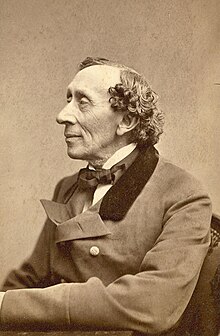
Hans Christian Andersen
Hans Christian Andersen often referred to in Scandinavia as H. C. Andersen; 2 April 1805 – 4 August 1875) was a Danish author. Although a prolific writer of plays, travelogues, novels, and poems, Andersen is best remembered for his fairy tales. Andersen's popularity is not limited to children; his stories, called eventyr in Danish, express themes that transcend age and nationality.
Andersen's fairy tales, which have been translated into more than 125 languages,have become culturally embedded in the West's collective consciousness, readily accessible to children, but presenting lessons of virtue and resilience in the face of adversity for mature readers as well.Some of his most famous fairy tales include "The Emperor's New Clothes", "The Little Mermaid", "The Nightingale", "The Snow Queen", "The Ugly Duckling", "Thumbelina" and many more.
His stories have inspired ballets, animated and live-action films and plays.
Early life
Hans Christian Andersen was born in the town of Odense, Denmark, on 2 April 1805. He was an only child. Andersen's father, also Hans, considered himself related to nobility. His paternal grandmother had told his father that their family had in the past belonged to a higher social class, but investigations prove these stories unfounded.A persistent theory suggests that Andersen was an illegitimate son of King Christian VIII, but this theory has been criticised.
Andersen's father, who had received an elementary education, introduced Andersen to literature, reading to him Arabian Nights.Andersen's mother, Anne Marie Andersdatter, was uneducated and worked as a washerwoman following his father's death in 1816; she remarried in 1818. Andersen was sent to a local school for poor children where he received a basic education and was forced to support himself, working as an apprentice for a weaver and, later, for a tailor. At 14, he moved to Copenhagen to seek employment as an actor. Having an excellent soprano voice, he was accepted into the Royal Danish Theatre, but his voice soon changed. A colleague at the theatre told him that he considered Andersen a poet. Taking the suggestion seriously, Andersen began to focus on writing.
He later said his years in school were the darkest and most bitter of his life. At one school, he lived at his schoolmaster's home. There he was abused in order "to improve his character", he was told. He later said the faculty had discouraged him from writing in general, causing him to enter a state of depression.
Hans Christian Andersen
Fairy Tales and Stories
English Translation: H. P. Paull (1872)
Original Illustrations by
Vilhelm Pedersen and Lorenz Frølich
Below is the complete list of Andersen’s 168 tales, in the chronological order of their original publication. Title variations and Danish equivalents may be found in the cross reference.
Andersen’s tale “Danish Popular Legends” was first published in The Riverside Magazine for Young People, Vol. IV, pp. 470-474, New York, October 1870. It has never been published in Denmark. The hypertext is based on an etext found in the Andersen Homepage of the Danish National Literary Archive.
It may be somewhat surprising to learn that a number of Andersen’s tales were published in America even before being published in Andersen’s native Denmark. According to Jean Hersholt’s introduction to The Andersen-Scudder Letters, University of California Press, 1949, ten tales were published by Horace Elisha Scudder, Andersen’s American editor, publisher and translator, in the above mentioned Magazine, in the years 1868-1870. After the Magazine closed down, Scudder published four other tales, in the years 1871-1873, in Scribner’s Monthly, an illustrated magazine for the people: “Lucky Peer” (in four installments), “The Great Sea-Serpent”, “The Gardener and the Manor”, and “The Flea and the Professor”. The hypertext of these four tales is based on the images found in the Making of America collection of Cornell University Library.
127 more tales are given in a hypertext rendition of Mrs. Paull’s nineteenth century translation, now in the public domain. Four more tales, contributed by Mike W. Perry and marked by a (*), are digitized from Fairy Tales and Other Stories by Hans Christian Andersen, revised and partly re-translated by W.A. and J. K. Craigie, Oxford Univ. Press, London, 1914. Mike also contributed the three tales marked by (**), from Wonder Stories Told for Children, Houghton Mifflin, Boston, 1900. The remaining 29 tales are given in title only, using Jean Hersholt’s translation, published in three volumes in 1942-49 by The Heritage Press, and now collectors’ items.
The 30 most popular tales are marked by a
. 30 more tales, which Elias Bredsdorff, in his book Hans Christian Andersen: The Story of His Life and Work: 1805-75, published in 1975 by Phaidon Press and republished in 1994 by Noonday Press, considers most characteristic and representative, are marked by a
. All these tales, and the 99 marked by a
, may be found in the book The Complete Hans Christian Andersen Fairy Tales, edited by Lily Owens, published in 1981 by Avenel Books and republished in 1993 by Grammercy Books.
Highly recommended contemporary translations of Andersen’s tales may be found in the following omnibus editions: Hans Christian Andersen: The Complete Fairy Tales and Stories, translated by Erik Christian Haugaard (1974, 156 tales); Eighty Fairy Tales, translated by R. P. Keigwin (1976, 80 tales); Hans Christian Andersen: Fairy Tales, translated by Reginald Spink (1960, 51 tales); Andersen’s Fairy Tales, translated by Pat Shaw Iversen (1966, 47 tales); Tales and Stories by Hans Christian Andersen, translated by Patricia L. Conroy and Sven Hakon Rossel (1980, 27 tales); Hans Andersen’s Fairy Tales: A Selection, translated by L. W. Kinsland (1959, 26 tales); The Stories of Hans Christian Andersen : A New Translation from the Danish, translated by Jeffrey Frank and Diana Crone Frank (2003, 22 tales).
All the above books, and other books in English by or about Hans Christian Andersen, may be found in our virtual bookstore. Books in French may be found in our librairie virtuelle.
- Jan 10 Tue 2017 22:01
-
英文兒童文學 week14
Hans Christian Andersen
Hans Christian Andersen often referred to in Scandinavia as H. C. Andersen; 2 April 1805 – 4 August 1875) was a Danish author. Although a prolific writer of plays, travelogues, novels, and poems, Andersen is best remembered for his fairy tales. Andersen's popularity is not limited to children; his stories, called eventyr in Danish, express themes that transcend age and nationality.
Andersen's fairy tales, which have been translated into more than 125 languages,have become culturally embedded in the West's collective consciousness, readily accessible to children, but presenting lessons of virtue and resilience in the face of adversity for mature readers as well.Some of his most famous fairy tales include "The Emperor's New Clothes", "The Little Mermaid", "The Nightingale", "The Snow Queen", "The Ugly Duckling", "Thumbelina" and many more.
His stories have inspired ballets, animated and live-action films and plays.
Early life
Hans Christian Andersen was born in the town of Odense, Denmark, on 2 April 1805. He was an only child. Andersen's father, also Hans, considered himself related to nobility. His paternal grandmother had told his father that their family had in the past belonged to a higher social class, but investigations prove these stories unfounded.A persistent theory suggests that Andersen was an illegitimate son of King Christian VIII, but this theory has been criticised.
Andersen's father, who had received an elementary education, introduced Andersen to literature, reading to him Arabian Nights.Andersen's mother, Anne Marie Andersdatter, was uneducated and worked as a washerwoman following his father's death in 1816; she remarried in 1818. Andersen was sent to a local school for poor children where he received a basic education and was forced to support himself, working as an apprentice for a weaver and, later, for a tailor. At 14, he moved to Copenhagen to seek employment as an actor. Having an excellent soprano voice, he was accepted into the Royal Danish Theatre, but his voice soon changed. A colleague at the theatre told him that he considered Andersen a poet. Taking the suggestion seriously, Andersen began to focus on writing.
He later said his years in school were the darkest and most bitter of his life. At one school, he lived at his schoolmaster's home. There he was abused in order "to improve his character", he was told. He later said the faculty had discouraged him from writing in general, causing him to enter a state of depression.
Hans Christian Andersen
Fairy Tales and Stories
English Translation: H. P. Paull (1872)
Original Illustrations by
Vilhelm Pedersen and Lorenz Frølich
Below is the complete list of Andersen’s 168 tales, in the chronological order of their original publication. Title variations and Danish equivalents may be found in the cross reference.
Andersen’s tale “Danish Popular Legends” was first published in The Riverside Magazine for Young People, Vol. IV, pp. 470-474, New York, October 1870. It has never been published in Denmark. The hypertext is based on an etext found in the Andersen Homepage of the Danish National Literary Archive.
It may be somewhat surprising to learn that a number of Andersen’s tales were published in America even before being published in Andersen’s native Denmark. According to Jean Hersholt’s introduction to The Andersen-Scudder Letters, University of California Press, 1949, ten tales were published by Horace Elisha Scudder, Andersen’s American editor, publisher and translator, in the above mentioned Magazine, in the years 1868-1870. After the Magazine closed down, Scudder published four other tales, in the years 1871-1873, in Scribner’s Monthly, an illustrated magazine for the people: “Lucky Peer” (in four installments), “The Great Sea-Serpent”, “The Gardener and the Manor”, and “The Flea and the Professor”. The hypertext of these four tales is based on the images found in the Making of America collection of Cornell University Library.
127 more tales are given in a hypertext rendition of Mrs. Paull’s nineteenth century translation, now in the public domain. Four more tales, contributed by Mike W. Perry and marked by a (*), are digitized from Fairy Tales and Other Stories by Hans Christian Andersen, revised and partly re-translated by W.A. and J. K. Craigie, Oxford Univ. Press, London, 1914. Mike also contributed the three tales marked by (**), from Wonder Stories Told for Children, Houghton Mifflin, Boston, 1900. The remaining 29 tales are given in title only, using Jean Hersholt’s translation, published in three volumes in 1942-49 by The Heritage Press, and now collectors’ items.
The 30 most popular tales are marked by a
. 30 more tales, which Elias Bredsdorff, in his book Hans Christian Andersen: The Story of His Life and Work: 1805-75, published in 1975 by Phaidon Press and republished in 1994 by Noonday Press, considers most characteristic and representative, are marked by a
. All these tales, and the 99 marked by a
, may be found in the book The Complete Hans Christian Andersen Fairy Tales, edited by Lily Owens, published in 1981 by Avenel Books and republished in 1993 by Grammercy Books.
Highly recommended contemporary translations of Andersen’s tales may be found in the following omnibus editions: Hans Christian Andersen: The Complete Fairy Tales and Stories, translated by Erik Christian Haugaard (1974, 156 tales); Eighty Fairy Tales, translated by R. P. Keigwin (1976, 80 tales); Hans Christian Andersen: Fairy Tales, translated by Reginald Spink (1960, 51 tales); Andersen’s Fairy Tales, translated by Pat Shaw Iversen (1966, 47 tales); Tales and Stories by Hans Christian Andersen, translated by Patricia L. Conroy and Sven Hakon Rossel (1980, 27 tales); Hans Andersen’s Fairy Tales: A Selection, translated by L. W. Kinsland (1959, 26 tales); The Stories of Hans Christian Andersen : A New Translation from the Danish, translated by Jeffrey Frank and Diana Crone Frank (2003, 22 tales).
All the above books, and other books in English by or about Hans Christian Andersen, may be found in our virtual bookstore. Books in French may be found in our librairie virtuelle.
- Jan 10 Tue 2017 21:39
-
英文兒童文學 week13
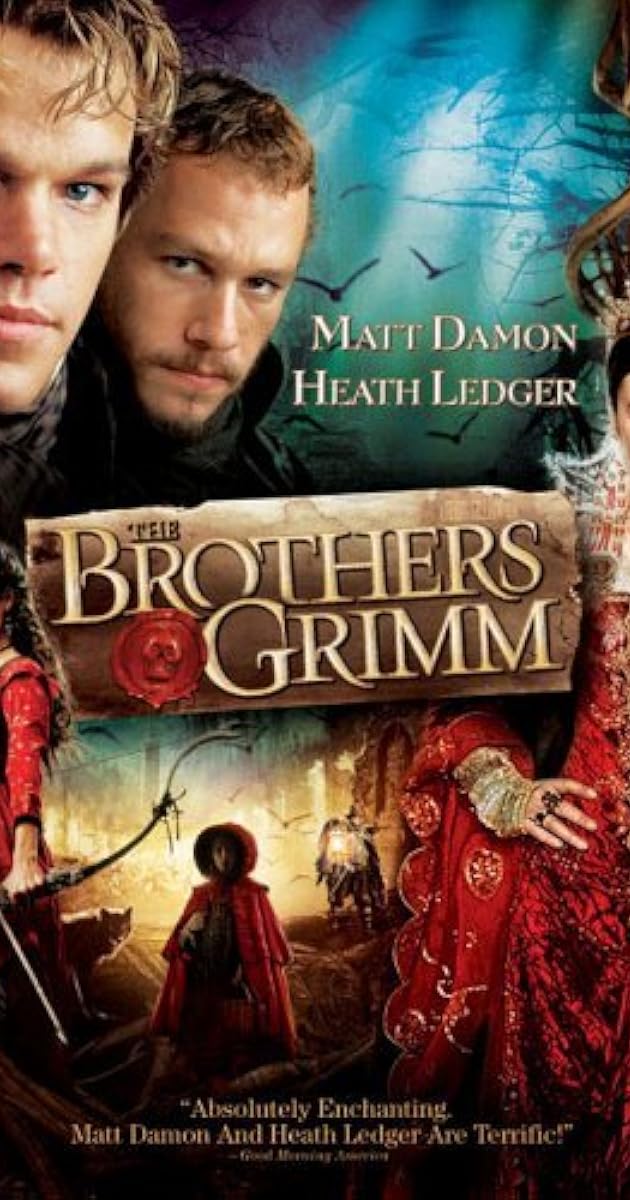
Brothers Grimm

The Brothers Grimm (die Brüder Grimm or die Gebrüder Grimm), Jacob (1785–1863) and Wilhelm Grimm (1786–1859), were German academics, philologists, cultural researchers, lexicographers and authors who together specialized in collecting and publishing folklore during the 19th century. They were among the best-known storytellers of folk tales, and popularized stories such as "Cinderella" ("Aschenputtel"), "The Frog Prince" ("Der Froschkönig"), "The Goose-Girl" ("Die Gänsemagd"), "Hansel and Gretel" ("Hänsel und Gretel"), "Rapunzel", "Rumpelstiltskin" ("Rumpelstilzchen"),"Sleeping Beauty" ("Dornröschen"), and "Snow White" ("Schneewittchen"). Their first collection of folk tales, Children's and Household Tales (Kinder- und Hausmärchen), was published in 1812.
The brothers spent their formative years in the German town of Hanau. Their father's death in 1796 caused great poverty for the family and affected the brothers for many years after. They both attended the University of Marburg where they developed a curiosity about German folklore, which grew into a lifelong dedication to collecting German folk tales. The rise of romanticism during the 19th century revived interest in traditional folk stories, which to the brothers represented a pure form of national literature and culture. With the goal of researching a scholarly treatise on folk tales, they established a methodology for collecting and recording folk stories that became the basis for folklore studies. Between 1812 and 1857, their first collection was revised and republished many times, growing from 86 stories to more than 200. In addition to writing and modifying folk tales, the brothers wrote collections of well-respected German and Scandinavian mythologies, and in 1838 they began writing a definitive German dictionary (Deutsches Wörterbuch), which they were unable to finish during their lifetimes.
The popularity of the Grimms' best folk tales has endured well. The tales are available in more than 100 languages and have been later adapted by filmmakers including Lotte Reiniger and Walt Disney, with films such as Snow White and the Seven Dwarfs and Sleeping Beauty. During the 1930s and 40s, the tales were used as propaganda by the Third Reich; later in the 20th century psychologists such as Bruno Bettelheim reaffirmed the value of the work, in spite of the cruelty and violence in original versions of some of the tales, which the Grimms eventually sanitized.
The Grimm Brothers'
Children's and Household Tales
(Grimms' Fairy Tales)
English Title | German Title | Aarne-Thompson-Uther Type | ||||
1 | The Frog King, or Iron Heinrich | Der Froschkönig oder der eiserne Heinrich | Type 440 | |||
2 | Katze und Maus in Gesellschaft | Type 15, Stealing the Partner's Butter | ||||
3 | Type 710 | |||||
4 | The Story of a Boy Who Went Forth to Learn Fear | Märchen von einem, der auszog das Fürchten zu lernen | Type 326 | |||
Sleeping Beauty

"Sleeping Beauty" (French: La Belle au bois dormant "The Beauty Sleeping in the Wood") by Charles Perrault or "Little Briar Rose" (German: Dornröschen) by the Brothers Grimm is a classic fairy tale written by Charles Perrault, which involves a beautiful princess, a sleeping enchantment, and a handsome prince. The version collected by the Brothers Grimm was an orally transmitted version of the originally literary tale published by Charles Perrault in Histoires ou contes du temps passé in 1697.[1] This in turn was based on "Sun, Moon, and Talia" by Italian poet Giambattista Basile (published posthumously in 1634), which was in turn based on one or more folk tales. The earliest known version of the story is Perceforest, composed between 1330 and 1344 and first printed in 1528.
Myth themes
Some folklorists have analyzed Sleeping Beauty as indicating the replacement of the lunar year (with its thirteen months, symbolically depicted by the thirteen fairies) by the solar year (which has twelve, symbolically the invited fairies). The basic elements of the story can also be interpreted as a nature allegory: the princess represents nature, the wicked fairy godmother is winter, who puts the Court to sleep with pricks of frost until the prince (spring) cuts away the brambles with his sword (a sunbeam) to allow the Sun to awaken sleeping princess (nature).
Robert Louis Stevenson

- Jan 10 Tue 2017 21:09
-
英文兒童文學 week12
fairy tales
fairy tales are stories that range from those originating in folk lore to more modern stories defined as literary fairy tales. A modern definition of the fairy tale , as provided by Jens Tismar's monologue in German, is a story that differs "from an oral folk tale",written by "a single identifiable author", can be characterised as "simple and anonymous",and exists in a mutable and difficult to define genre with a close ralationship to folktales.
- Dec 15 Thu 2016 13:14
-
英文兒童文學 week11
To Kill a Mockingbird
| Author | Harper Lee |
|---|---|
| Country | United States |
| Language | English |
| Genre | Southern Gothic, Bildungsroman |
| Published | July 11, 1960 |
| Publisher | J. B. Lippincott & Co. |
| Pages | 281 |
To Kill a Mockingbird is a novel by Harper Lee published in 1960. It was immediately successful, winning the Pulitzer Prize, and has become a classic of modern American literature. The plot and characters are loosely based on the author's observations of her family and neighbors, as well as on an event that occurred near her hometown in 1936, when she was 10 years old.
The novel is renowned for its warmth and humor, despite dealing with the serious issues of rape and racial inequality. The narrator's father, Atticus Finch, has served as a moral hero for many readers and as a model of integrity for lawyers. One critic explains the novel's impact by writing, "In the twentieth century, To Kill a Mockingbird is probably the most widely read book dealing with race in America, and its protagonist, Atticus Finch, the most enduring fictional image of racial heroism."[1]
As a Southern Gothic novel and a Bildungsroman, the primary themes of To Kill a Mockingbird involve racial injustice and the destruction of innocence. Scholars have noted that Lee also addresses issues of class, courage, compassion, and gender roles in the American Deep South. The book is widely taught in schools in the United States with lessons that emphasize tolerance and decry prejudice. Despite its themes, To Kill a Mockingbird has been subject to campaigns for removal from public classrooms, often challenged for its use of racial epithets.
Reaction to the novel varied widely upon publication. Literary analysis of it is sparse, considering the number of copies sold and its widespread use in education. Author Mary McDonough Murphy, who collected individual impressions of To Kill a Mockingbird by several authors and public figures, calls the book, "an astonishing phenomenon".[2] In 2006, British librarians ranked the book ahead of the Bible as one "every adult should read before they die".[3] It was adapted into an Oscar-winning film in 1962 by director Robert Mulligan, with a screenplay by Horton Foote. Since 1990, a play based on the novel has been performed annually in Harper Lee's hometown of Monroeville, Alabama.
To Kill a Mockingbird was Lee's only published book until Go Set a Watchman, an earlier draft of To Kill a Mockingbird, was published on July 14, 2015. Lee continued to respond to her work's impact until her death in February 2016, although she had refused any personal publicity for herself or the novel since 1964.

The story told in the novel parallels two court cases that took place in Alabama but was not based directly on them: The Scottsboro Trials of 1931, in which nine black youths were tried for allegedly raping two white women on a train in north Alabama; and a November 1933 incident in Monroeville in which Naomi Lowery, a poor white woman, alleged that Walter Lett, a black ex-convict, sexually assaulted her. Lee began work on what would become the novel in 1956 while living in New York City. She originally conceived it as a novel focusing on main character Jean Louise "Scout" Finch as an adult returning to Maycomb for a summer visit and confronting the racial realities of her hometown in response to the civil rights movement; it was to be titled Go Set a Watchman. Her editor at Lippincott Publishers, Tay Hohoff, convinced her to pull out the flashbacks of Scout's youth and refocus the novel around them. Lee did so, and the result, To Kill A Mockingbird, was published in 1960 to critical acclaim and public enthusiasm, winning the 1961 Pulitzer Prize for fiction.
Chapters
http://www.wikisummaries.org/wiki/To_Kill_a_Mockingbird
To Kill a Mockingbird Quotations with Analysis
Chapter 1
Quotation
"Maycomb was an old town, but it was a tired old town when I first knew it. In rainy weather the streets turned to red slop; grass grew on the sidewalks, the courthouse sagged in the square. Somehow it was hotter then: a black dog suffered on a summers day; bony mules hitched to Hoover carts flicked flies in the sweltering shade of the live oaks on the square. Men's stiff collars wilted by nine in the morning. Ladies bathed before noon, after their three-o'clock naps, and by nightfall were like soft teacakes with frostings of sweat and sweet talcum." Page 5
Analysis
The descriptive detail paints a vivid picture of the town of Maycomb, which provides some insight on Scout's feelings about Maycomb. In addition, the narrator provides the setting for the story and sets the mood for a quiet and somewhat dull town, which sets the stage for the conflict of Tom's trial.
Chapter 2
Quotation
"'Your father does not know how to teach. You can have a seat now.'
I mumbled that I was sorry and retired meditating upon my crime." Page 17
Analysis
Scout's first grade teacher makes her feel bad about being able to read, when she should feel proud that she can read and write at such a young age. Scout even apologizes and referred to her ability as a crime. This exchange demonstrates how many people in Maycomb are very small minded in their views.
Chapter 3
Quotation
"'First of all,' he said, 'If you can learn a simple trick, Scout, you'll get along a lot better with all kinds of folks. You never really understand a person until you consider things from his point of view-'
'Sir?'
'-until you climb into his skin and walk around in it.'" Page 30
Analysis
This passage exemplifies the special bond between Atticus and his daughter, Scout. Throughout the novel, Scout learns more from her father than anyone else. Atticus teaches Scout important things about life and the world that she does acquire from school. Scout listens to Atticus very carefully. has great respect for him, and deeply values his advice.
Other analysis
http://www.gradesaver.com/to-kill-a-mockingbird/study-guide/quotations-with-analysis
- Dec 15 Thu 2016 12:43
-
英文兒童文學 week10
Why Mosquitoes Buzz in People’s Ears
About This Book
In this West African folk tale, retold by Verna Aardema,
a mosquito brags to an iguana that he spied a farmer digging
yams as big as mosquitoes. The iguana scoffs at such a notion
and refuses to listen to any more nonsense. Grumbling, he
puts sticks in his ears and scuttles off through the reeds
and sets off a chain reaction among myriad animals inhabiting
the same landscape.
The iguana offends a friendly python, who shoots down a
rabbit hole and terrifies a rabbit. Seeing the rabbit scares a
crow overhead, who spreads an alarm that danger is near. When
a monkey reacts to the alarm, an owlet is killed, which sets off
a wave of grieving in the mother owl so profound that she is
unable to wake the sun each day with her hooting.
The nights grow longer, and when the King Lion calls a meeting
to get to the bottom of the situation, the chain of events is
traced back to the source of all the trouble, the pesky mosquito.
Finding the culprit satisfies the mother owl, who calls the sun
back again. But, alas, the mosquito is forever plagued with a
guilty conscience, compelling him forever to be a pest.
The vibrant neo-primitive illustrations, which earned this title
a Caldecott medal in 1976, enhance and embellish the tale. This
is a timeless story sure to charm a wide range of readers and
listeners.
Cause and effect
This story is a resource for teachers to teach the skill cause and
effect: "A cause is something that makes something else happen;
An effect is what happens as a result of the cause"
The idea that the mosquito is to blame for the unfortunate death
of the owlet is an example of cause and effect. The actions from
the other animals also offers several more examples of cause and
effect as each animal does something that causes the next animal
to do something. This chain of events finally causes the owlet to die.
Teachers can use this text to show students how actions (causes)
make other things happen (effect).
About the Authors or Illustrators
Diane Dillon
Born
Glendale, CA, US
Current Home
Brooklyn, NY
During more than four decades of illustrating children's books,
two-time Caldecott Medalists Leo and Diane Dillon have received
nearly every award and honor in this genre. They have illustrated
scores of books written by others, and they have written two titles,
Rap a Tap Tap: Here's Bojangles, Think of That! and the Coretta
Scott King honor book Jazz on a Saturday Night.
"The musicians we included in Jazz on a Saturday Night are some
of our favorites," state the Dillons, "but there are many more
great musicians we didn't have room for in the book, but would
have loved to include. We started with the idea and the text first,
but after the art was done the text was altered to fit better with
the images. Our editor was part of that process. The art was done
in gouache, which is great for a graphic technique of flat shape and color."
Leo Dillon and Diane Sorber were born eleven days apart in 1933 --
Leo in Brooklyn, New York, and Diane near Los Angeles, California.
When they met at Parsons School of Design in New York City in 1954,
each already aspired to a life of art. Meeting first through each
other's artwork, each immediately recognized the talent and
mastery of the other. Over the years, their competitive friendship
evolved into a lasting marriage and artistic partnership. "In terms
of our art, it is virtually impossible to consider us separately," say
the Dillons. "On every project we undertake, we hash out ideas
together. In 1997 we celebrated our 40th anniversary and in 1997
we completed our 40th book which is "To Everything There is a Season."
The Dillons have produced an incredible variety of drawings and
illustrations for prints, book jackets, textbooks, album covers, and
of course children's books. Among their many honors, they have
received two Caldecott Medals - for Ashanti to Zulu and Why
Mosquitoes Buzz in People's Ears - four New York Times Best
Illustrated Awards, four Boston Globe/Horn Book Awards, two
Coretta Scott King Awards, three Coretta Scott King Honors, and
the Society of Illustrators Gold Medal.
There are two major statements they want to convey.
"The first is all people, whatever the culture or race, experience
the same things in living on this planet. We all have a lot in common,"
state the Dillons. "It is our beliefs that divide us. We have little
control over what life brings us but we can change our thoughts.
The second statement is that since the beginning of history, people
have expressed themselves graphically in wonderful and unique ways.
Art in its many forms has survived to inform us of lives long gone.
Art inspires, lifts our sprit, and brings beauty to our lives. We wish
to pay homage to it and the people that created it."
Leo and Diane Dillon have one son, Lee, who is also a talented painter,
sculptor, and jewelry craftsman. They live in New York City
Leo Dillon
Born
Brooklyn, NY, US
During more than four decades of illustrating children's books,
two-time Caldecott Medalists Leo and Diane Dillon have received
nearly every award and honor in this genre. They have illustrated
scores of books written by others, and they have written two titles,
Rap a Tap Tap: Here's Bojangles, Think of That! and the Coretta
Scott King honor book Jazz on a Saturday Night.
"The musicians we included in Jazz on a Saturday Night are some
of our favorites," state the Dillons, "but there are many more great
musicians we didn't have room for in the book, but would have loved
to include. We started with the idea and the text first, but after
the art was done the text was altered to fit better with the images.
Our editor was part of that process. The art was done in gouache,
which is great for a graphic technique of flat shape and color."
Leo Dillon and Diane Sorber were born eleven days apart in 1933 --
Leo in Brooklyn, New York, and Diane near Los Angeles, California.
When they met at Parsons School of Design in New York City in
1954, each already aspired to a life of art. Meeting first through
each other's artwork, each immediately recognized the talent and
mastery of the other. Over the years, their competitive friendship
evolved into a lasting marriage and artistic partnership. "In terms of
our art, it is virtually impossible to consider us separately," say the
Dillons. "On every project we undertake, we hash out ideas together.
In 1997 we celebrated our 40th anniversary and in 1997 we completed our 40th book which is "To Everything There is a Season."
The Dillons have produced an incredible variety of drawings and
illustrations for prints, book jackets, textbooks, album covers,
and of course children's books. Among their many honors, they
have received two Caldecott Medals - for Ashanti to Zulu and
Why Mosquitoes Buzz in People's Ears - four New York Times
Best Illustrated Awards, four Boston Globe/Horn Book Awards,
two Coretta Scott King Awards, three Coretta Scott King Honors,
and the Society of Illustrators Gold Medal.
There are two major statements they want to convey. "The first
is all people, whatever the culture or race, experience the same things
in living on this planet. We all have a lot in common," state the Dillons.
"It is our beliefs that divide us. We have little control over what
life brings us but we can change our thoughts. The second statement
is that since the beginning of history, people have expressed
themselves graphically in wonderful and unique ways. Art in its
many forms has survived to inform us of lives long gone.
Art inspires, lifts our sprit, and brings beauty to our lives.
We wish to pay homage to it and the people that created it."
Leo and Diane Dillon have one son, Lee, who is also a talented
painter, sculptor, and jewelry craftsman. They live in New York City
video clip
https://www.youtube.com/watch?v=iklvgV3M4z8
Cultural diversity
Cultural diversity is the quality of diverse or different cultures,
as opposed to monoculture, the global monoculture, or a
homogenization of cultures, akin to cultural decay. The phrase
cultural diversity can also refer to having different cultures
respect each other's differences. The phrase "cultural diversity"
is also sometimes used to mean the variety of human societies or cultures
in a specific region, or in the world as a whole. Globalization
is often said to have a negative effect on the world's cultural diversity.
QUICK ANSWER
Social diversity is all of the ways that people within
a single culture are set apart from each other. Elements
of social diversity can include ethnicity, lifestyle, religion, language, tastes and preferences.
In general, ideas of social diversity are expanding, in part
because global interaction and communication are becoming
easier and more common. Worldwide, the standard of
living is generally improving too. Scholars believe that
there is a correlation between healthier lifestyles and
the willingness of people to accept diversity as a positive
element within culture. The more people are exposed to
certain elements of culture, the more likely those elements
are to be absorbed into it.
- Dec 15 Thu 2016 12:42
-
英文兒童文學 week9